Florence in summer: events, traditions and what to do month by month
Florence in summer knows how to celebrate. It rediscovers itself in crowded squares, open-air concerts, and traditions that have repeated for centuries — not just art and history, but an authentic collective life made of ancient rituals and dates Florentines look forward to all year. Here’s the calendar of summer events, month by month.
June in Florence: the richest month
June is the month Florence explodes with energy. It starts with Pitti Uomo, the international menswear trade fair that turns the historic center into a global runway — no ticket needed, just stroll around Piazza Pitti and the surrounding streets to catch street style like nowhere else. A few days later comes Firenze Rocks, the major music festival at Parco delle Cascine, drawing tens of thousands of people and a young, international crowd.
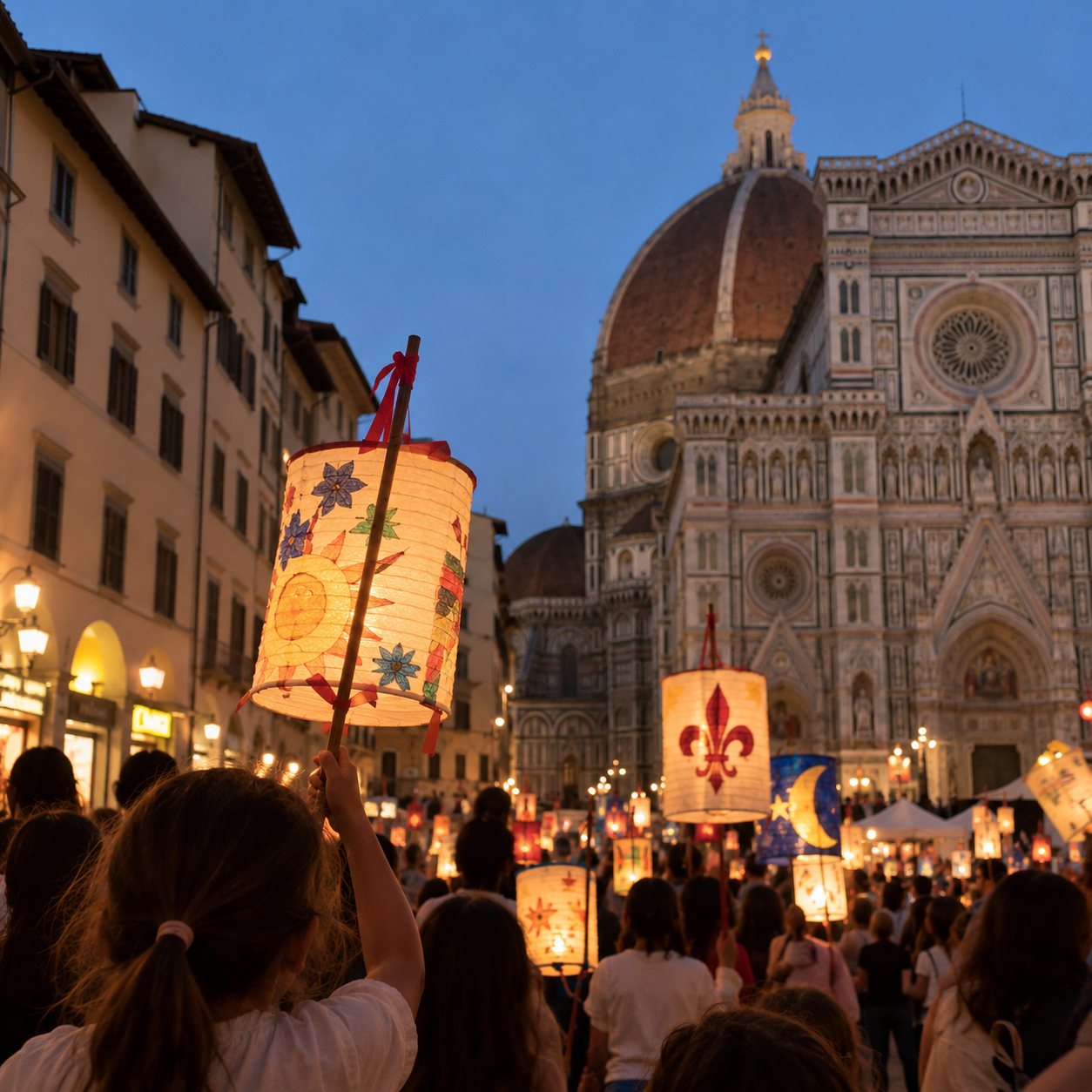
The month’s high point is June 24th, the feast of San Giovanni Battista, Florence’s patron saint: shops close, families gather in the squares, and fireworks are launched from Piazzale Michelangelo, watched by thousands of Florentines along the riverbanks. Tied to this night is an ancient ritual few tourists know about: the “acqua di San Giovanni.” On the night between the 23rd and 24th, flowers and aromatic herbs are gathered and left to soak in a basin of water outdoors under the stars; the next morning, that scented water is used to wash one’s face, believed to bring good luck and beauty for the year ahead — a rural tradition still alive in many Tuscan families.
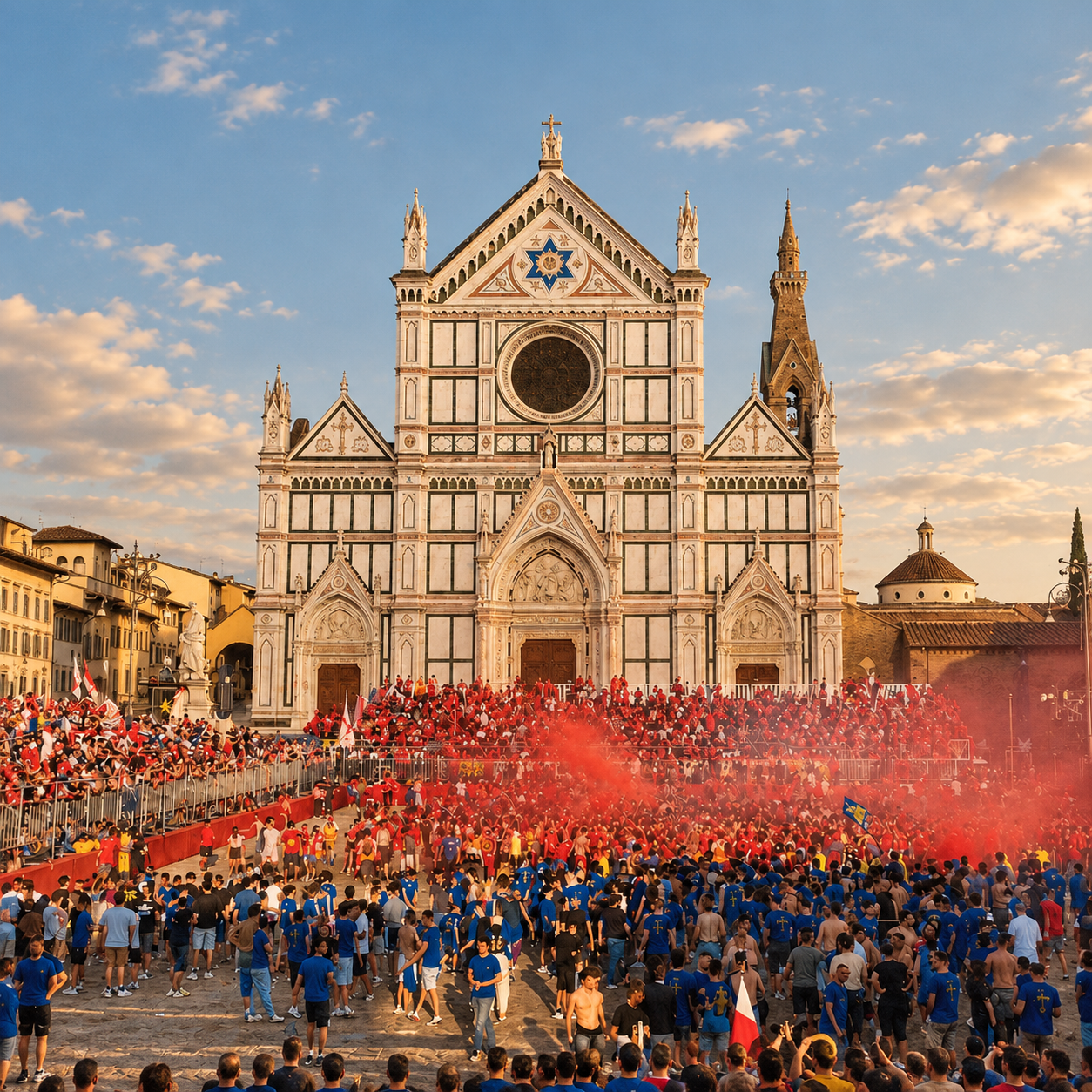
Also in June, Piazza Santa Croce hosts Calcio Storico Fiorentino: an ancient, at times brutal sport found nowhere else, with Renaissance costumes and the city’s four historic quarters competing against one another. Watching a match at least once is an authentically Florentine experience.
July in Florence: long evenings and open-air culture
In July, Florence slows down but doesn’t stop: evenings stretch longer and the city takes on a more relaxed, informal pace. The most anticipated event is the Estate Fiesolana, a festival of music, theater, and dance held at the scenic Roman Theater of Fiesole, with a view over the city that’s worth the trip on its own — especially at sunset.
July is also the month of open-air cinema, with big screens set up in courtyards and squares — Villa Bardini and Piazza degli Uffizi, with the Vasari Corridor in the background, are especially worth seeking out. Keep an eye out too for special extended evening hours at the museums.
August in Florence: the city empties — and it is beautiful
August has an undeserved reputation. Many Florentines leave and some shops close, but what remains is a surprisingly livable Florence: quieter streets, less crowded museums, squares you can walk through without pushing past tour groups. Evenings along the river become a daily ritual, with bars open late and a breeze offering relief from the heat. It’s the Florence of the Florentines who stayed — and perhaps its truest version.
Florence in summer is not just a matter of museums and monuments. It is a city that lives, celebrates and transforms — and that reserves its best experiences for those who know how to wait for the right moment.
Palazzo della Nave is the ideal starting point for all of this: in the heart of the historic centre, steps from the events, with someone ready to advise you on what is truly worth doing during your stay.